A.I.S. Bins, Silos, and Storage Tanks are engineered for the safe, efficient storage of powders, granules, flakes, and liquids across industrial processing environments. Designed for both indoor and outdoor installations, AIS storage solutions support consistent flow, protect product quality, and integrate seamlessly with feeding, conveying, and processing equipment.
These systems are widely used in food & beverage, pharmaceutical, nutraceutical, chemical, plastics, battery materials, agriculture, and minerals processing—anywhere material integrity and controlled discharge matter.
Storage Solutions, Defined
AIS provides purpose-built storage equipment based on material behavior, capacity, environment, and downstream process requirements:
Bins
Compact vessels typically used for short-term or buffer storage, day bins, or surge hoppers.
Silos
Large-capacity vertical storage vessels for long-term or bulk material storage, indoors or outdoors. Included in our silo engineering is our Fluidized Zone Mixer that allows mixing of ingredients while stored in our silos.
Storage Tanks
Liquid or slurry storage vessels designed for atmospheric or pressure-rated operation, with full integration into process systems.
Each system is engineered around the product—not the other way around.
Core Engineering Features
AIS storage systems are designed to solve real-world bulk handling problems:
• Carbon steel or stainless-steel construction (304 / 316 / 316L)
• Conical, mass-flow, or funnel-flow hopper designs
• Welded, dust-tight construction
• Indoor or outdoor-rated designs
• Structural supports, skirts, or leg-mounted configurations
• Seamless integration with feeders, conveyors, and process equipment
Flow properties, bulk density, angle of repose, cohesion, and segregation tendencies are evaluated to prevent common problems like rat-holing, bridging, or erratic discharge.
Discharge & Flow Control Options
Getting material out of storage is just as important as getting it in.
AIS offers a wide range of discharge and flow-assist options:
• Slide gates, knife gates, and butterfly valves
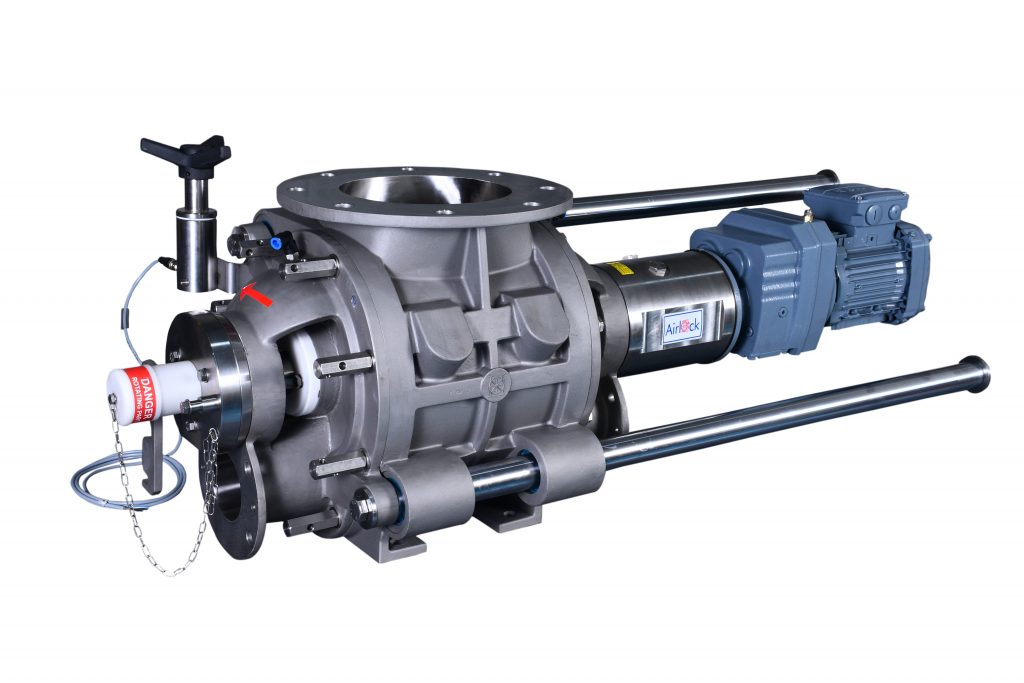
• Rotary airlocks for dust-tight discharge
• Screw feeders and live-bottom reclaim systems
• Vibrators and pneumatic knockers
• Fluidizing pads or air cannons
• Mass-flow hoppers for difficult materials
These options ensure predictable, repeatable discharge—no sledgehammers, no prayer circles.
Filling & Loading Options
AIS bins and silos can be configured with multiple filling methods:
• Pneumatic conveying fill lines
• Mechanical conveyors or bucket elevators
• Bag dump or bulk bag unloading stations
• Filter receivers for dust-controlled filling
• Level-controlled or weigh-controlled loading
Dust collection and venting are engineered directly into the vessel to maintain clean operation during filling.
Integrated Dust Collection & Venting
Every storage system displaces air. AIS makes sure it goes somewhere safe.
Options include:
• Integrated bin vent filters
• Cartridge or bag-style vent filters
• Explosion-rated venting systems
• Central dust collection connections
• HEPA filtration for fine or hazardous powders
This prevents over-pressurization, dust escape, and product loss while maintaining safe working conditions.
ATEX & NFPA Compliance for Hazardous Materials
For combustible dusts and hazardous environments, AIS designs storage systems in accordance with:
• ATEX (Zones 20, 21, 22)
• NFPA (NFPA 652, 654, 61, 68, and 69 where applicable)
Available safety features include:
• Explosion venting or flameless vents
• Grounding and bonding provisions
• Explosion isolation interfaces
• Inert gas blanketing or purge connections
• Certified electrical components
These systems are engineered to meet regulatory requirements without compromising operability or maintainability.
Storage Tanks for Liquids & Slurries
AIS storage tanks support a wide range of liquid and semi-liquid materials:
• Atmospheric or pressure-rated tanks
• Agitated or non-agitated designs
• Heated or insulated tanks
• Sanitary or industrial construction
• CIP-ready designs for food & pharma
Tank configurations can be integrated with pumps, heat exchangers, dosing systems, and process controls to function as active process vessels—not just passive storage.
Industries Served
AIS bins, silos, and tanks are used across demanding industries including:
Food & Beverage
Pharmaceutical & Life Sciences
Nutraceuticals
Chemicals & Specialty Materials
Plastics & Polymers
Battery & Energy Materials
Agriculture & Feed
Minerals & Pigments
If the material must remain stable, flow consistently, and stay where it belongs, this is where AIS earns its keep.
Why AIS?
Storage failures ripple through entire plants. AIS designs storage systems as integrated process components, not isolated vessels. Flow reliability, safety compliance, ease of maintenance, and system compatibility are engineered from day one.
When material behaves, production follows.