Dust Collection vs. Dust Control
And Why the Difference Matters in Modern Process Plants
In powder processing, bulk handling, milling, mixing, and conveying systems, airborne dust is not just housekeeping. It is safety, compliance, yield, uptime, and profitability.
Yet many facilities confuse dust collection with dust control.
They are not the same.
And the difference determines whether you are reacting to dust… or preventing it.
What Is Dust Collection?
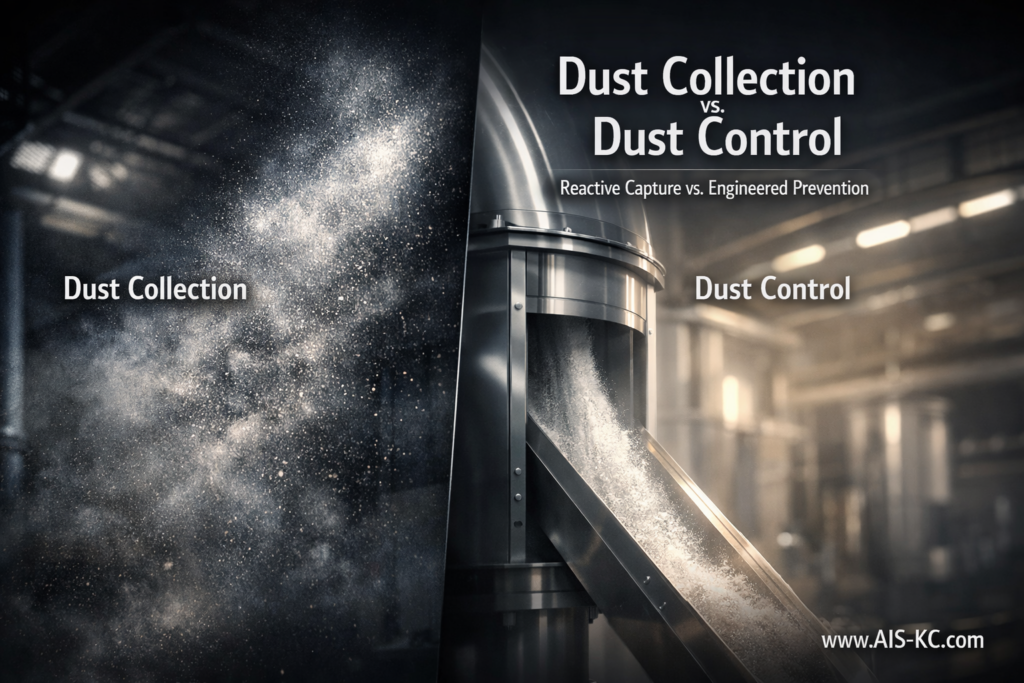
Dust collection is reactive.
It captures airborne particles after they have already become suspended in the environment. Typically this involves:
- Pulse-jet baghouses
- Cartridge dust collectors
- Cyclones
- HEPA filtration systems
- Rotary airlock discharge valves
Dust collectors are essential. They:
- Protect worker health
- Maintain OSHA compliance
- Reduce airborne contamination
- Capture product fines for recovery
But here is the uncomfortable truth:
If your only strategy is dust collection, you are already losing material, energy, and control.
Dust collection solves the symptom. Not the source.
What Is Dust Control?
Dust control is proactive.
It prevents dust from becoming airborne in the first place.
Dust control focuses on:
- Sealed transfer points
- Enclosed screw conveyors
- Properly vented hoppers
- Controlled pneumatic conveying velocities
- Integrated ingredient feeding systems
- Gain-in-weight and loss-in-weight dosing systems
- Proper pressure balancing
Instead of cleaning the air, you design the system so dust never escapes.
That’s engineering.
The Hidden Cost of Poor Dust Strategy
Fine powders are valuable. In many industries — food, nutraceutical, battery materials, specialty chemicals — airborne fines equal lost profit.
Uncontrolled dust leads to:
- Product loss
- Cross-contamination
- Explosion hazards (NFPA risk)
- Increased filter change-outs
- Maintenance downtime
- Air compressor overuse
- Employee health risks
And here is the strategic point:
The more dust you generate, the larger your collector must be.
The larger your collector, the more energy you burn.
The more energy you burn, the more operating cost you carry forever.
Dust control reduces the need for oversized dust collection systems.
Dust Collection vs. Dust Control: A Systems Perspective
Think of it like fluid dynamics.
Dust becomes airborne when:
- Impact energy is too high
- Drop heights are excessive
- Velocities are uncontrolled
- Pressure differentials are unmanaged
In other words: poor system integration.
Dust control starts with system design.
Dust collection supports it.
That’s the correct order.
How AIS Responds
AIS does not sell standalone dust collectors.
AIS engineers complete material handling systems.
That includes:
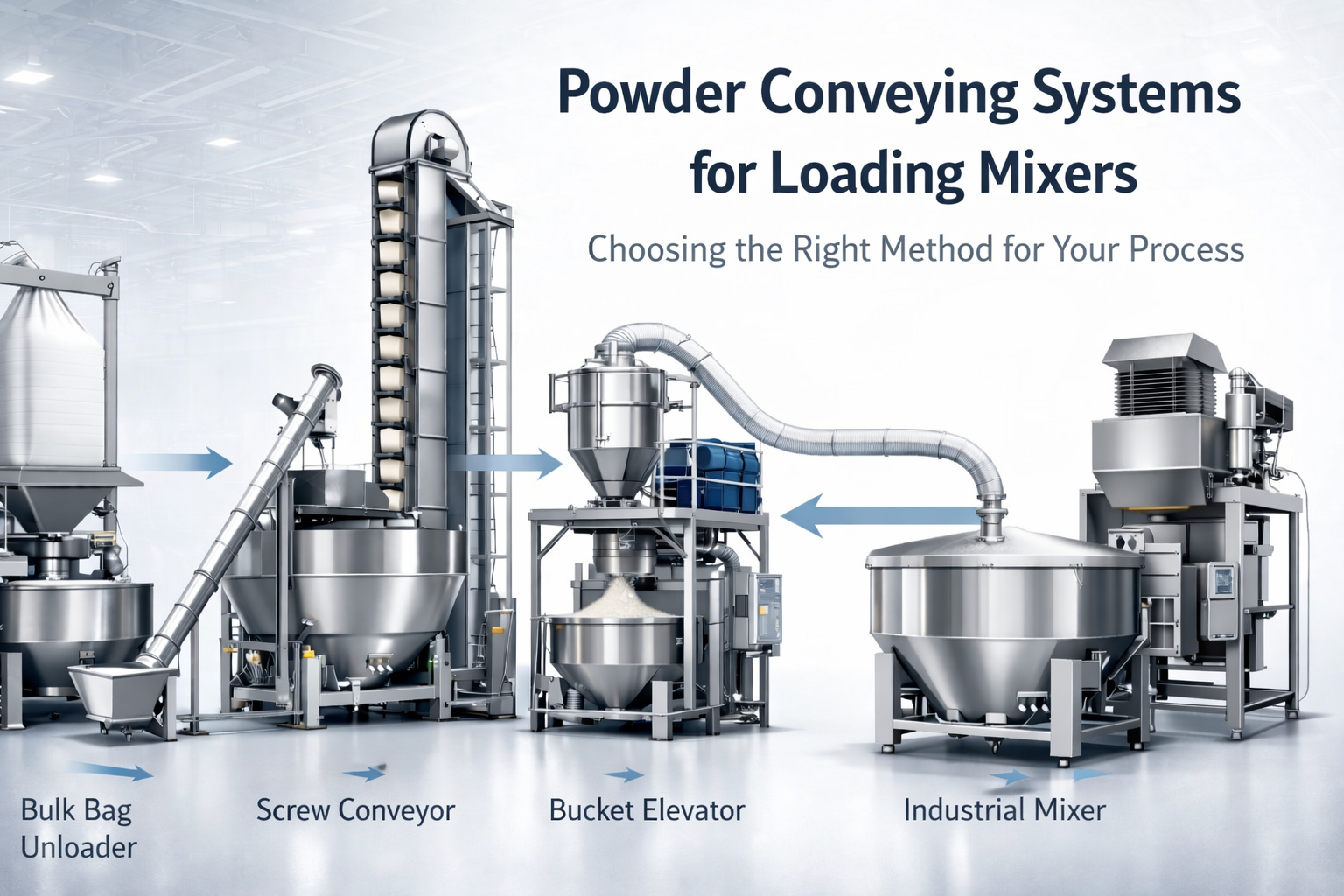
- Sealed conveying systems (mechanical or pneumatic)
- Controlled ingredient feeding (loss-in-weight or gain-in-weight)
- Proper hopper venting and pressure balancing
- Integrated rotary valves and airlocks
- Dust-tight transfer stations
- Correctly sized pulse-jet collectors (when required)
- Explosion venting or suppression systems
- Service envelope planning and layout optimization
Because AIS is part of the broader Proc-X Manufacturing Group, we integrate:
- Mixing (PerMix)
- Milling (DP Pulverizers)
- Conveying and dosing (AIS)
- Valving and discharge control (Airlock)
Dust strategy is built into the process from day one.
Not bolted on later.
When You Need Collection vs. When You Need Control
If dust is already airborne and visible:
You need collection immediately.
If you are designing or upgrading a system:
You need control first.
The most efficient plants use both.
But they prioritize prevention over reaction.
Final Thought
Dust is not just a cleanliness issue.
It is thermodynamics, particle size distribution, air velocity, and system balance interacting in real time.
Design it correctly, and dust becomes manageable.
Design it poorly, and it becomes a chronic operational tax.
AIS designs systems where dust is engineered out of the process — not chased around the building with filters.
And that difference shows up in uptime, safety, and profit.