Batch Time Optimization in Milling, Mixing & Extrusion: Why Material Handling Defines Your Throughput
In modern powder processing and bulk material systems, true production capacity is not defined by equipment speed — it is defined by batch cycle time.
Manufacturers often focus on the internal performance of mills, mixers, and extrusion lines. However, real-world throughput is determined by how efficiently materials are:
• Loaded into the system
• Transferred between process steps
• Discharged, weighed, and packaged
• Cleaned and prepared for the next batch
If loading and unloading are inefficient, even the most advanced mixer or mill becomes a bottleneck.
This is where AIS (Automated Ingredient Systems) transforms production efficiency.
What Actually Determines Batch Time?
A complete batch cycle includes:
- Raw material receiving and staging
- Weighing and dosing
- Equipment loading
- Processing (mixing, milling, extrusion)
- Discharge and transfer
- Cleaning or changeover
The processing step is often the shortest portion of the cycle.
For example:
- Mixing time: 15–25 minutes
- Loading time: 20 minutes
- Discharge time: 15 minutes
- Manual weighing: 20 minutes
Total batch time: 70–80 minutes
Actual mixing time: ~30% of the cycle
That means 70% of your production time is controlled by material handling, not mixing performance.
Why Loading Systems Matter in Industrial Milling & Mixing
In Milling Applications
Whether using ACM mills, hammer mills, pin mills, or jet mills, consistent feed rate and controlled loading directly impact:
- Particle size distribution (D50 / D90 control)
- Energy efficiency (kWh per ton)
- Mill wear
- Product consistency
Manual feeding creates surges. Surges create PSD variation. Variation creates rejects.
AIS solves this with:
- Loss-in-weight feeders
- Gain-in-weight batching systems
- Automated screw feeding
- Integrated dust collection
- Controlled surge hoppers
Result: stable feed rate = stable performance.
In Mixing Applications
Industrial ribbon mixers, paddle mixers, plow mixers, and vacuum dryers rely on:
- Accurate ingredient dosing
- Controlled loading sequence
- Dust containment
- Fast, complete discharge
Improper loading causes:
- Extended blend times
- Poor homogeneity
- Cross-contamination risks
- Inconsistent liquid injection performance
AIS integrates:
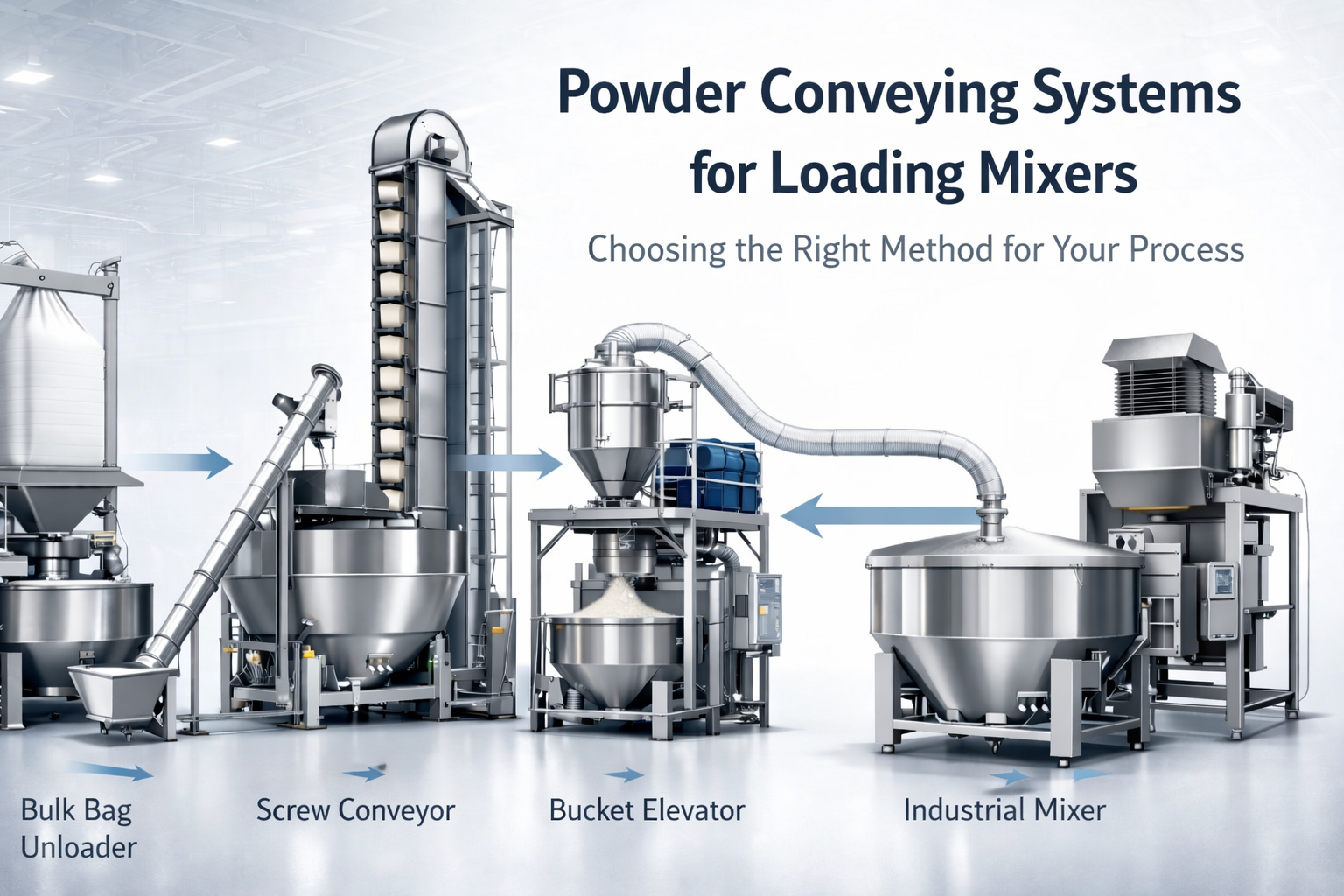
- Bulk bag unloaders
- Super sack dischargers
- Bag dump stations with dust collection
- Pneumatic conveying systems
- Automated ingredient batching
- Load-cell controlled platforms
This reduces loading time dramatically while improving blend uniformity.
In Extrusion & Continuous Processing
Extrusion lines are even more sensitive.
Feed interruptions cause:
- Density shifts
- Pressure fluctuations
- Temperature instability
- Product inconsistency
AIS provides:
- Continuous loss-in-weight feeding
- Automated minor ingredient dosing
- Surge hoppers
- Vacuum conveying
- Real-time PLC control integration
The result is stable extrusion performance and maximum uptime.
The Hidden Cost of Poor Loading & Discharge
Let’s break it down.
If your plant runs:
- 10 batches per day
- Each batch loses 20 minutes due to inefficient loading
- 5 production days per week
That’s 1,000+ hours per year of lost production capacity.
At industrial output values, this often equals hundreds of thousands of dollars annually.
Optimizing material handling is often the fastest ROI in a plant upgrade.
How AIS Designs Systems Around Throughput
AIS does not sell stand-alone equipment.
We engineer complete ingredient handling and bulk material systems around:
- Target batch time
- Desired throughput (TPH)
- Dust control requirements
- Allergen containment
- Cleanability and washdown
- Automation level
- Integration with mills, mixers, and extrusion systems
Our systems include:
- Bulk bag unloaders & IBC systems
- Automated ingredient batching skids
- Gain-in-weight and loss-in-weight feeders
- Pneumatic conveying systems
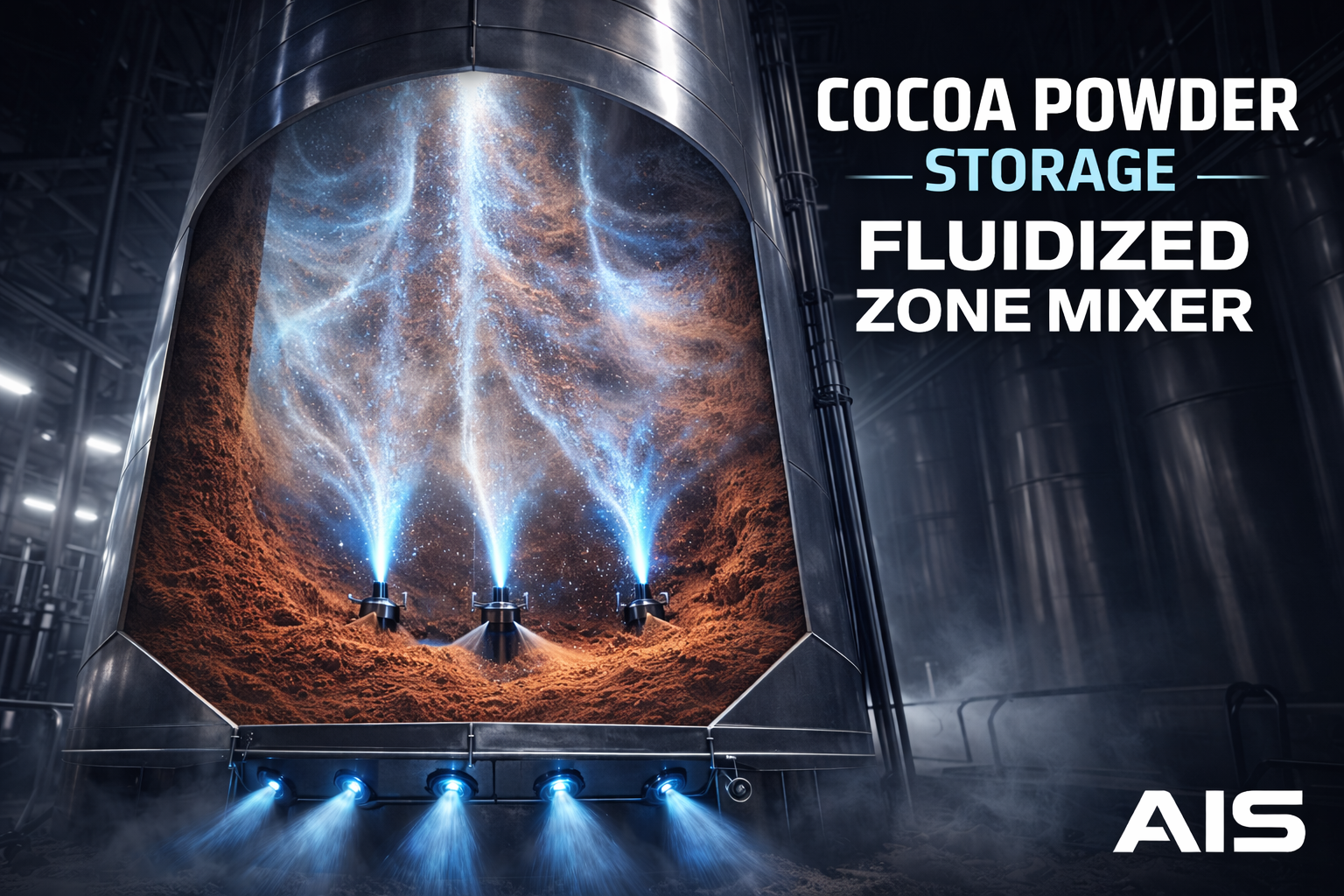
- Silo storage with conditioning
- Dust collection and filtration
- Automated discharge stations
- Fully integrated PLC/HMI controls
We design upstream and downstream — not just the equipment in the middle.
Faster Changeovers = Higher Annual Capacity
In industries such as:
- Food & beverage manufacturing
- Nutraceutical & protein production
- Pharmaceutical processing
- Chemical manufacturing
- Mineral and powder processing
- Plastics and compounding
Changeover time directly affects profitability.
AIS systems reduce:
- Manual handling
- Cross contamination risk
- Cleaning time
- Operator dependency
Automated discharge and controlled transfer eliminate the slowest part of the cycle.
Designing for Total System Efficiency
The most efficient plant is not the one with the fastest mixer.
It is the one where:
- Ingredients are staged properly
- Feeding is controlled and repeatable
- Processing runs continuously
- Discharge is immediate and clean
- Changeover is engineered, not improvised
When loading and unloading are optimized, mills run smoother, mixers blend faster, and extrusion lines stabilize.
AIS engineers systems that make your process flow.
Why AIS
As part of the Proc-X Manufacturing Group, AIS integrates seamlessly with:
- Industrial milling systems
- High-performance mixing equipment
- Extrusion platforms
- Storage and packaging systems
We design complete ingredient handling systems that increase throughput, reduce labor, and maximize batch efficiency.
If your batch time is longer than your process time, the solution is not a bigger mixer.
The solution is better material handling.